

I Fell Down a Hill Trying to Avoid Someone
An essay about denial, mortality, and one very bad shortcut.

Trish and I were running late for a workout.
We parked at the top of the hill in front of the health club, and I spotted, way down below, a friend I’d been avoiding. Stopping to chat would have been awkward, and I was already late.
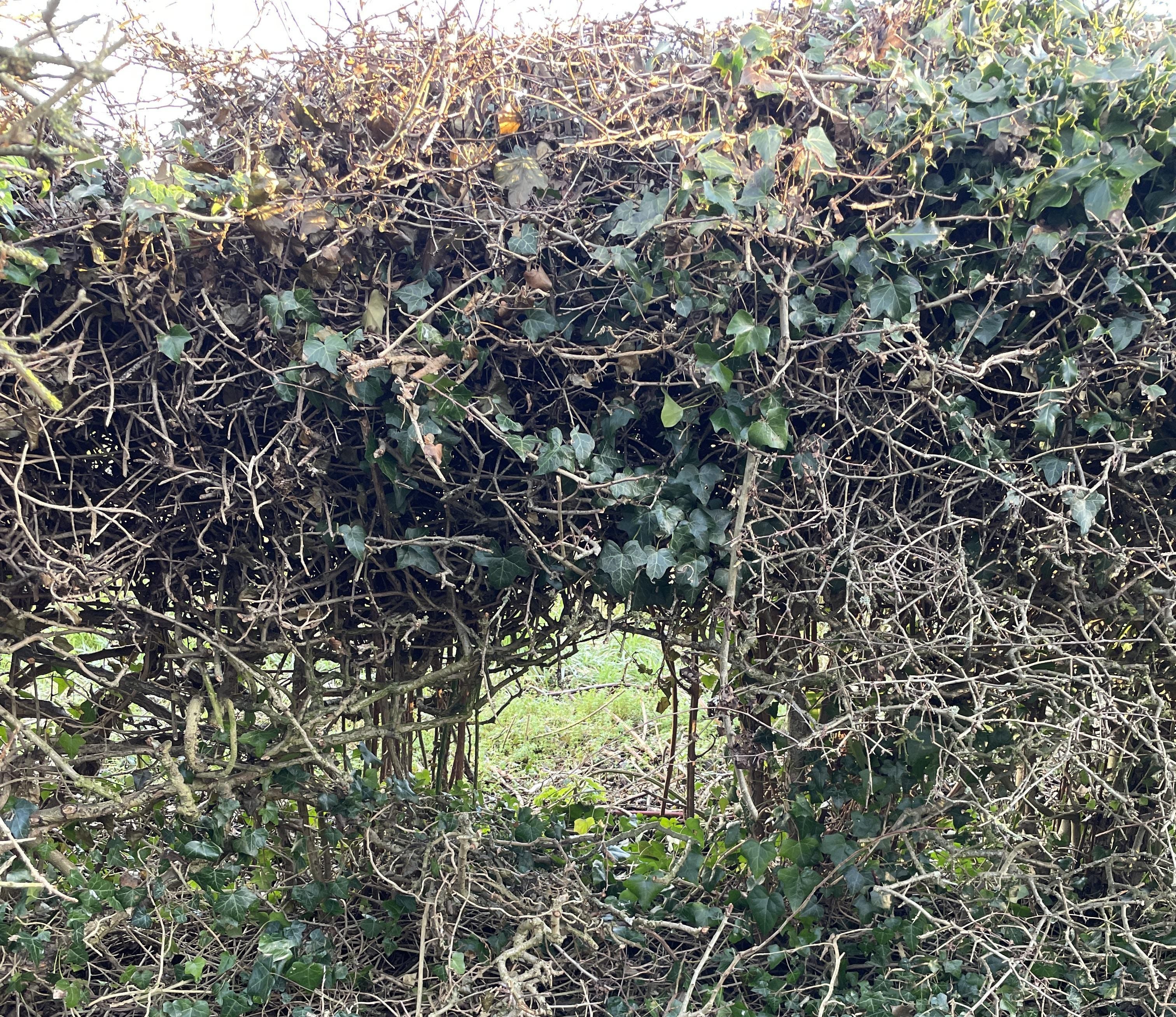
I spotted some hedges off to the side and went there to hide. There was a small opening, large enough for cowards, and I figured I could squeeze through, walk down that side of the hill, and get to the workout, sight unseen. I ducked under, tripped over some vines, and tumbled down the hill, rolling, scraping, gathering speed, and landed flat on my back on the cement sidewalk,
where I stared up at the sky wondering how to get up and still look cool.
I was pretty banged up and a little bloody, but it could have been much worse. I sprang to my feet, brushed myself off, and looked around to see who had noticed. A worker passing by looked me up and down and asked, “should I call security?” I didn’t know if he wanted to help me or remove me from the premises.
I went to the workout and pretended I was fine.
I said to Trish later, “My lesson for the day is not to take shortcuts.”
She looked at me and said, “That’s not the lesson.”
“What do you mean?”
She just shook her head.
Okay, I get it. I shouldn’t avoid things. But I’m terrific at it. I can get out of almost anything.
In graduate school, an earnest classmate named Saul kept asking me out for lunch. He had the goal of meeting every student from our class outside of school at least once. Over the course of a year, I had the flu, shingles, gout, visiting relatives, a juice cleanse, and once, mysteriously, “a neck thing.”
Eventually, he stopped asking. Avoidance works.
I come from a long line of avoiders. Growing up, my parents, brother and I avoided all public displays of affection. Private ones too. We weren’t big on expressing our fears either, which helps explain why I was comfortable not telling my mother about my open-heart surgery last year until two days afterward.
My surgery was set for a Tuesday morning, and the following Sunday was her 90th birthday party, which she had planned on her own to avoid telling my brother and me that she didn’t trust us to help. She said, “I just know what people want, sweetie.”
I knew how important the party was to her, but there was no way I could attend five days after surgery. But if I told her about the operation in advance, she’d worry. And maybe cancel it. I wanted to avoid that.
Plus, once your mother knows about something, it becomes real.
I hardly told anyone about the upcoming surgery, which is exhausting in its own way. I was having a conversation about a new restaurant with a friend and wondering: Should I tell her I’m getting heart surgery next week? That I might die before I eat the stuffed artichokes she’s raving about?
If I didn’t talk about it, I could pretend it wasn’t happening. That’s the beauty of magical thinking. You can pretend, once in a while, that the problem doesn’t exist.
And then it becomes unavoidable.
On the morning of the surgery, they wheeled me through the hospital on a gurney. The orderly made small talk as I lay flat beside him on the elevator. I played along, talking about the Cubs, wondering if that would be the last conversation of my life.
Lying alone on the gurney in the operating room under the brightest lights I’ve ever seen, I ran out of places to hide. I looked up at those harsh white lights.
They looked nothing like heaven.
The anesthesiologist got me ready and I looked into my surgeon’s eyes. Then everything went away.
I woke up feeling stoned, which was not altogether terrible. I heard everything went well, said I was thirsty and went back to sleep. I woke up the next day with a brutal hangover.
I called my mom from the hospital two days after the operation, three days before her party.
“Hey mom, I just had a sternotomy and am recovering in the hospital right now.” I thought “sternotomy” sounded minor. Too minor, it turned out.
“What in God’s name is a sternotomy? Did you make that up?”
I explained what happened, and my mom went from anger (“You couldn’t have scheduled it for after my party?”) to depression (“You’re all anyone will talk about”) to acceptance (“I’m grateful you’re okay”).
Her party was a huge hit, and life has mostly returned to normal. Almost.
Whether I’m catching my breath while out for a run or getting dizzy after standing up too quickly, there’s a voice that clears its throat and says, “Don’t get cocky. I’m still here.”
A few weeks ago, I tried to sneak through some hedges to avoid an awkward conversation and came out bloodied.
I brushed myself off and told Trish I was fine.
I was.
But also, you know, not.
Thank you for this story. It says so much!
I love this. And thanks. Now I know I'm the same as you. Except I vacillilate between avoidance and telling too much. You're the wiser one.