
The Walls Have Ears

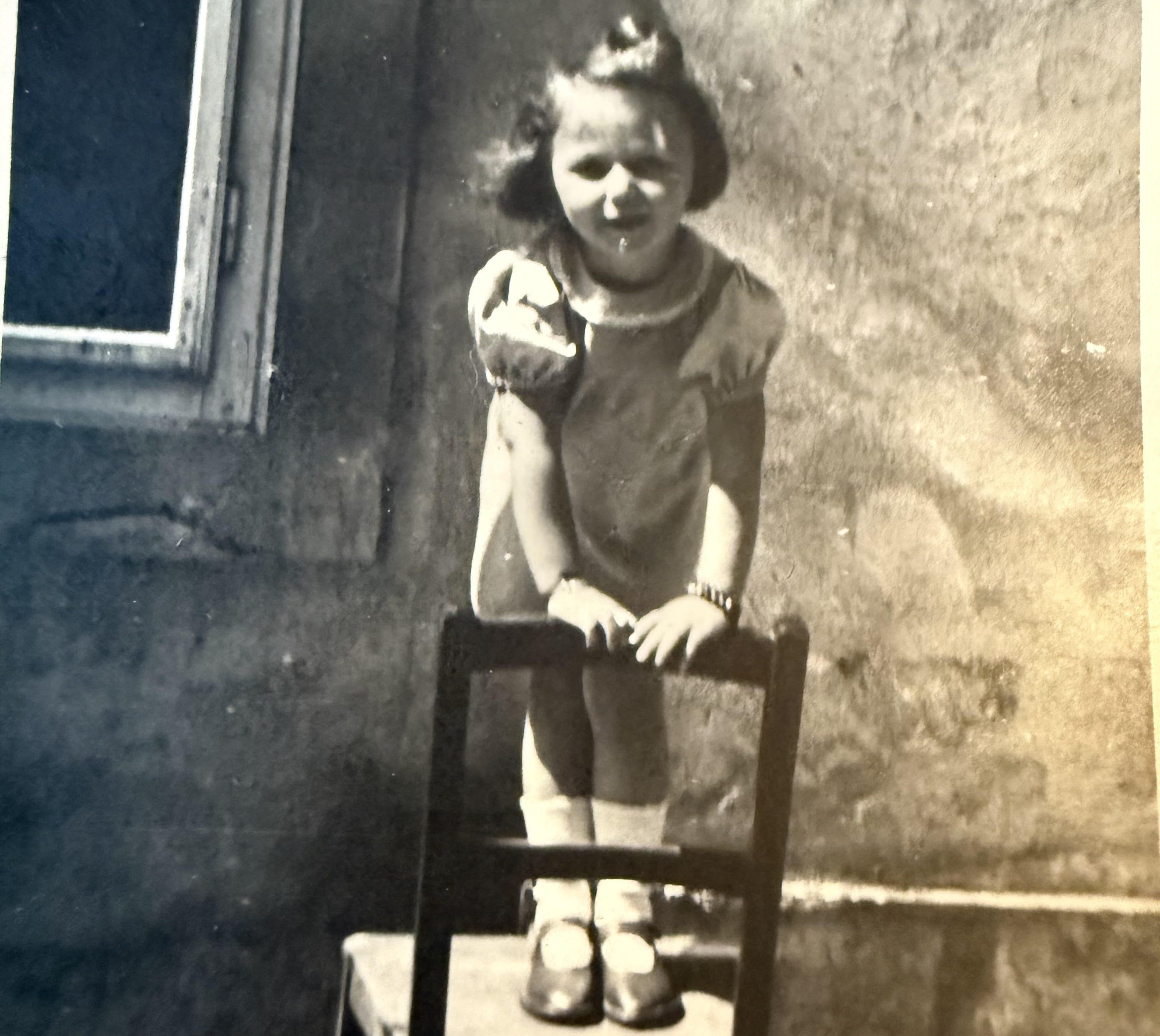
“You’re not gonna write about this, are you?” my mom asked, annoyed.
“Well, yeah, probably,” I said.
“Sheesh,” she replied. “Nothing’s private anymore.”
My mom grew up in Vienna’s Leopoldstadt district during World War II.
By the time she was five years old, she was aware that many of her neighbors and friends had yellow stars on their clothes. One day, her mother came home without their weekly ration of bread. She had seen a group of Jews with armed soldiers next to them and tried to give some bread to the women. A soldier threatened her with a gun, grabbed the bread, and said if she had extra to give to Saujuden, she didn’t need any herself. She came home in tears.
Neighbors spied on neighbors and old friends turned against each other. Whenever my mom asked her parents what was happening, they’d say, “Shh, die Wände haben Ohren.”
The walls have ears.
She also grew up believing she was Catholic, but a year ago a DNA test revealed she was Polish and Jewish on her mother’s side. Since her mother wasn’t Polish or Jewish, the results didn’t make sense.
My mom dismissed the report. “The past is in the past. I don’t need a DNA test to tell me who I am.”
But recently, we were having lunch in her apartment when she suddenly said, “You know, after the war, we delivered matzah from Vienna to my aunts in the countryside.”
She took another bite of salad.
I put my fork down. “I’m sorry, what?”
“We brought it when we visited them. You couldn’t find matzah outside Vienna.”
“Were your aunts Jewish?”
“Don’t be ridiculous. There weren’t any Jews in the countryside.”
I waited. “Then why would they want matzah?”
She shrugged. “I guess they liked the taste.”
I stared at her. I found it hard to believe that rural Austrian Catholics had suddenly developed an inexplicable fondness for unleavened bread.
“Mom—”
“Oh, stop. You think everything is a bigger deal than it is.”
“Well yeah, that’s kind of what I do for a living.”
She considered this, then added, almost as an afterthought, “I suppose you’d think it’s a big deal that your grandfather was married to someone else before my mother.”
“What?” My mom was ninety. I was sixty. How was I just hearing this now?
“His first wife had an affair with their chauffeur,” she said. “They divorced and he married my mother, who was fifteen years younger.”
“Their chauffeur?” I asked. “Who had a chauffeur in 1930s Vienna?”
“I wasn’t there, Mark,” she said, waving her hand, as if I were the one complicating an otherwise perfectly normal story.
“Where did the money go?”
“He lost it in Monte Carlo.”
Obviously.
“Mom, maybe that’s why you’re Jewish on your mother’s side. Maybe your birth mother was actually your dad’s—”
“Or maybe my mom was Jewish all along and hid it.”
“Well, wouldn’t she have told you that once you married Dad? Your parents knew he was Jewish, right? Wouldn’t that have been a good time to tell you?”
She looked down at her plate.
“Well, she never believed the war really ended.”
I sat there for a moment.
“What do you mean she never believed the war really ended?”
“She never got over the trauma,” my mom said. “Too many neighbors did terrible things.”
“Did she ever talk about it?”
“No. We didn’t talk about things like that.”
I met my grandmother in her Vienna apartment when I was seven or eight. While the adults talked, I explored the apartment and sampled what looked like a cookie covered in whipped cream and chocolate sprinkles. It turned out to be a cracker with mayonnaise and something fishy. I spit it into the toilet.
There was also a white cross hanging above her bed. I stood in front of it for the family photo.
We stayed at a nearby hotel, but during our weeklong visit, my grandmother never left her apartment. At the time I thought it was because she was old. Now I understand it was something else.
My mother started jabbing her fork at the cake.
I took out my phone and showed her some funny pictures of my kids goofing off and she burst out laughing.
I love hearing her laugh.
Sometimes I think she’s surprised to be so happy.
Thank you for sharing this. I feel like we've lost so many of the old stories. It's important for us to remember.
Amazing. You are amazing. That was the shortest story to explain the longest and most-difficult-to-explain origin/experience of your family. I loved every letter!